

When it comes to cleaning a precision rifle, there’s no shortage of opinions. Benchrest and F-Class shooters often clean far more frequently, while others swear their rifle shoots best when it’s dirty. As with most things in precision shooting, the right answer usually lives somewhere in the middle.
One of the PRS shooters we work closely with shared how his cleaning process has evolved based on real match conditions. Since his primary focus is PRS, this regimen is built specifically around how PRS matches are shot and what has proven reliable over time.
Cleaning Intervals Based on Match Schedule
A typical one-day PRS match consists of roughly 100 rounds fired. Two-day national matches usually total around 200 rounds, with an optional Friday “train-up” day that can push the round count closer to 250.
For a one-day match, his routine typically looks like this:
- The rifle is cleaned prior to match week
- Enough rounds are fired to foul the barrel (anywhere from a few shots to 30–40, depending on how deep the cleaning was)
- 5–50 practice rounds are fired during the week
- The match is shot (approximately 100 rounds)
By the time he returns home, the barrel usually has around 150 rounds on it. At that point, the rifle is cleaned again to reset it.
For a two-day match, the process is similar, but the Friday train-up day is factored in. Fewer practice rounds are usually fired earlier in the week, with fouling and additional practice happening during train-up. The rifle then runs the entire weekend without cleaning, resulting in roughly 250 rounds between cleanings.
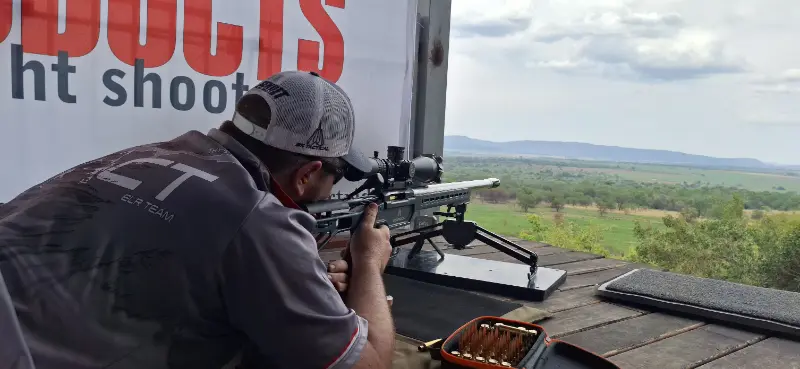
Powder Choice Matters
This interval has worked well when running cleaner-burning powders like Varget and H4350. When using dirtier powders—or shooting suppressed—the only adjustment may be cleaning between day one and day two of a national match.
One of the best indicators that cleaning is necessary is velocity. As fouling builds, velocity often increases. Monitoring velocity with a Garmin chronograph during matches makes it possible to track this in real time and fine-tune cleaning intervals before performance is affected.
Regular Cleaning Procedure
Whether cleaning at 150 rounds or 250 rounds, the process remains consistent:
- BoreTech C4 Carbon Remover or BoreTech Eliminator
- 4–5 wet patches through the barrel
- 20–30 strokes with a tight-fitting nylon brush
- A few additional wet patches
- Several dry patches
- Alcohol patches followed by a final dry patch
- The chamber is cleaned using a chamber mop
- The crown is cleaned by hand using a patch and carbon remover
This approach keeps fouling under control without stripping the barrel back to bare metal every time.
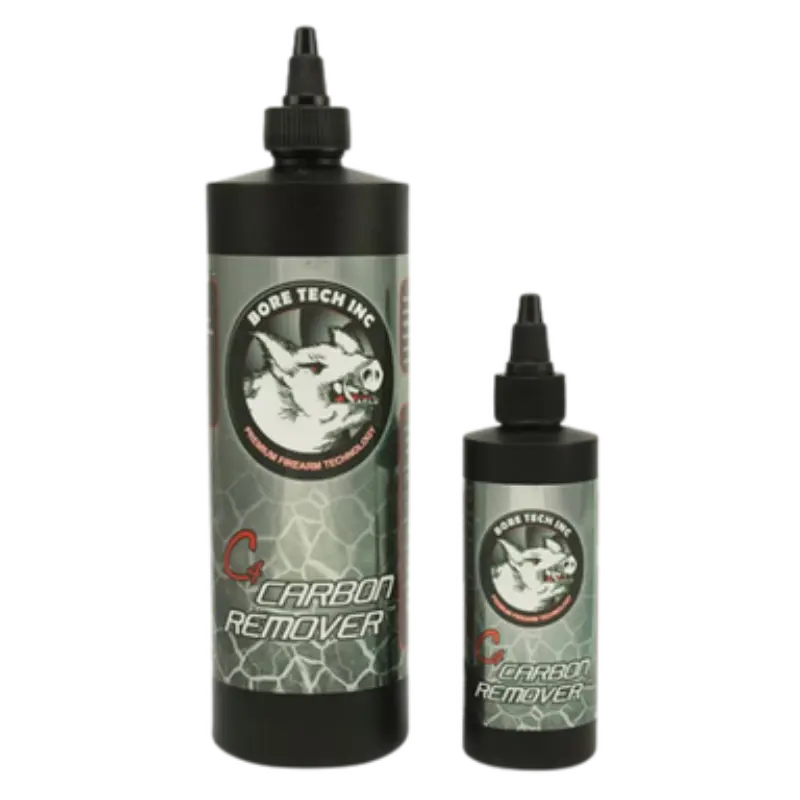
BoreTech C4 Carbon Remover
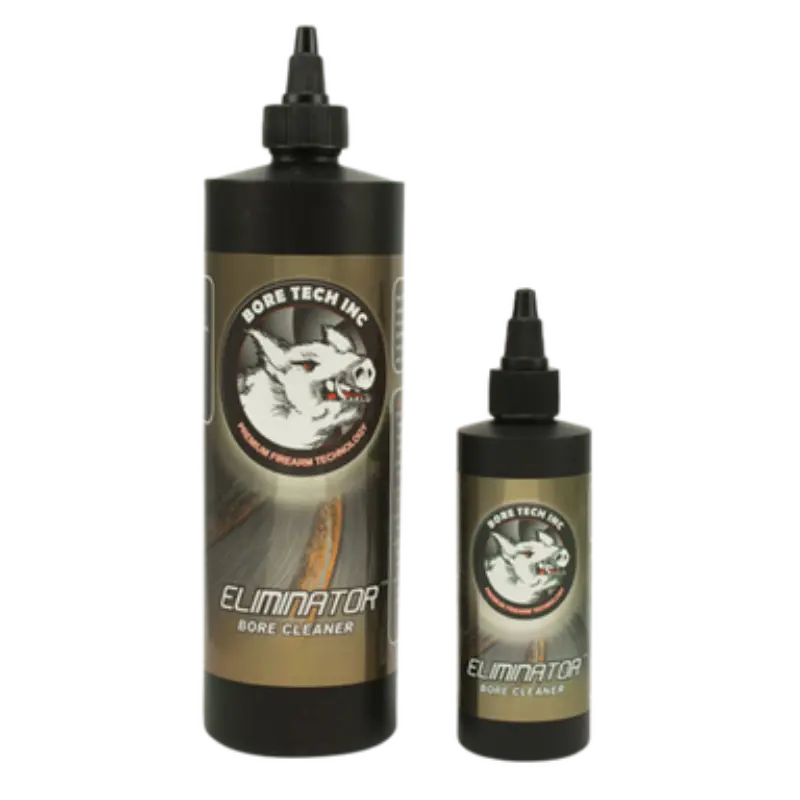
BoreTech Eliminator Bore Cleaner
Scrubbing to Bare Metal (Every ~600 Rounds)
Many shooters talk about scrubbing a barrel all the way back to bare metal, but this isn’t something that’s done after every cleaning. In this case, a full reset is typically performed about every 600 rounds as a way to completely remove stubborn carbon buildup and prevent a carbon ring from becoming an issue over the life of the barrel. The overall technique is similar to the regular cleaning process, but the chemical, ThorroClean, used is more aggressive.
Bare-metal cleaning process:
- Apply the solution with patches
- Use the cleaner on a brush for 20–30 strokes
- Patch the barrel out and repeat if necessary
In some cases, a single cycle is enough. In others, the process may need to be repeated two or even three times to fully remove all fouling. This is where a bore scope becomes especially useful, helping to visually confirm process. When the barrel is fully reset, it can take 30–40 rounds to foul back in and return to normal velocity. Because of this, a dedicated practice session is always planned before taking a freshly scrubbed barrel to a match.
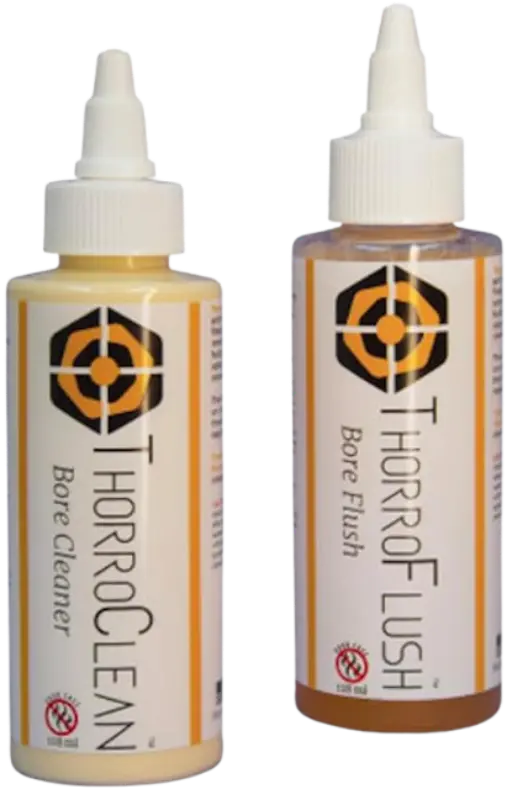
ThorroClean
The Goal
The goal isn’t a spotless barrel—it’s consistent performance. Light, regular cleaning helps manage fouling without constantly chasing velocity, while periodic full resets prevent carbon rings from becoming a pressure and velocity issue later in the barrel’s life.
This process has proven effective at maintaining predictable performance, controlling pressure, and allowing shooters to focus on execution rather than equipment variables.